
TUNING GAIN POTS ON AN OMNI 6 PIGTAIL
An Omni 6 came in dim, not from anything wrong with the glass or photocathode but from a factory gain pot cranked to 178k ohms. Diagnosed, mapped the pigtail, and re-tuned to 107k ohms in the darkroom.
THE SYMPTOM
The tube came in dim. Not dead, not flickering, just dim. It powered on, it ran, the image was there. It was simply too dark to be useful.
The easy assumption is a tired tube at the end of its life, or a failing PSU. Except, neither fit. The image was clean.1 No heavy scintillation, no snow, no black spots crawling the field. A tube on its way out gets noisy before it goes dark. This one stayed quiet and just sat dim. That put the problem upstream of the tube, somewhere in how it was being driven.
Before touching anything, I cleared the housing. Multimeter across the gain knob, the pigtail pins, and the ribbon cables, checking voltage and resistance at each point.2 Everything on the housing side read sane. Power was getting where it needed to go. The dimness was coming from the tube's own drive circuit, not the body it sat in.
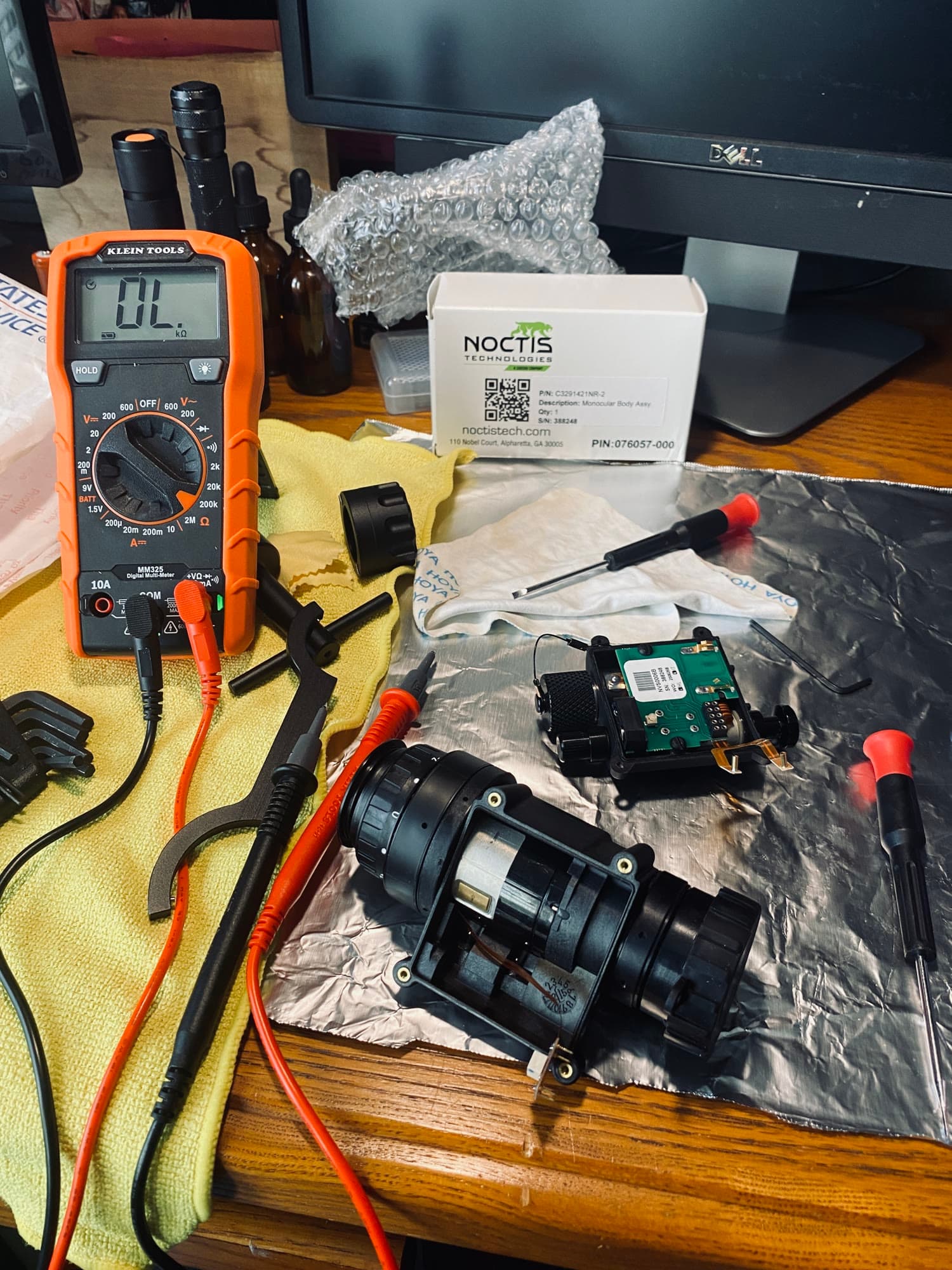
MAPPING THE PIGTAIL
With the housing cleared, the pigtail was all that was left. It's the small flex board hanging off the tube that handles power conditioning. On these early-2000s Omni 6 units3 it carries two potentiometers. No labels, no markings, no datasheet taped to the back. Two pots and whatever the factory dialed in years ago.
I asked around on a couple of forums to see if anyone had numbers. A few people pointed me at roughly 30k and 100k for the two pots, and every one of them said the same thing: it's guesswork. Trial and error. Every tube is a little different, and the factory values are a starting point, not a rule.4
So I mapped it myself. Probing each pot to see what it actually did, I worked out which one fed resistance into the gain path and which set the lower baseline. The lower pot wanted to sit near 30k. The gain pot was the one that mattered, and it was the one that was wrong. Someone had it cranked to 178k.
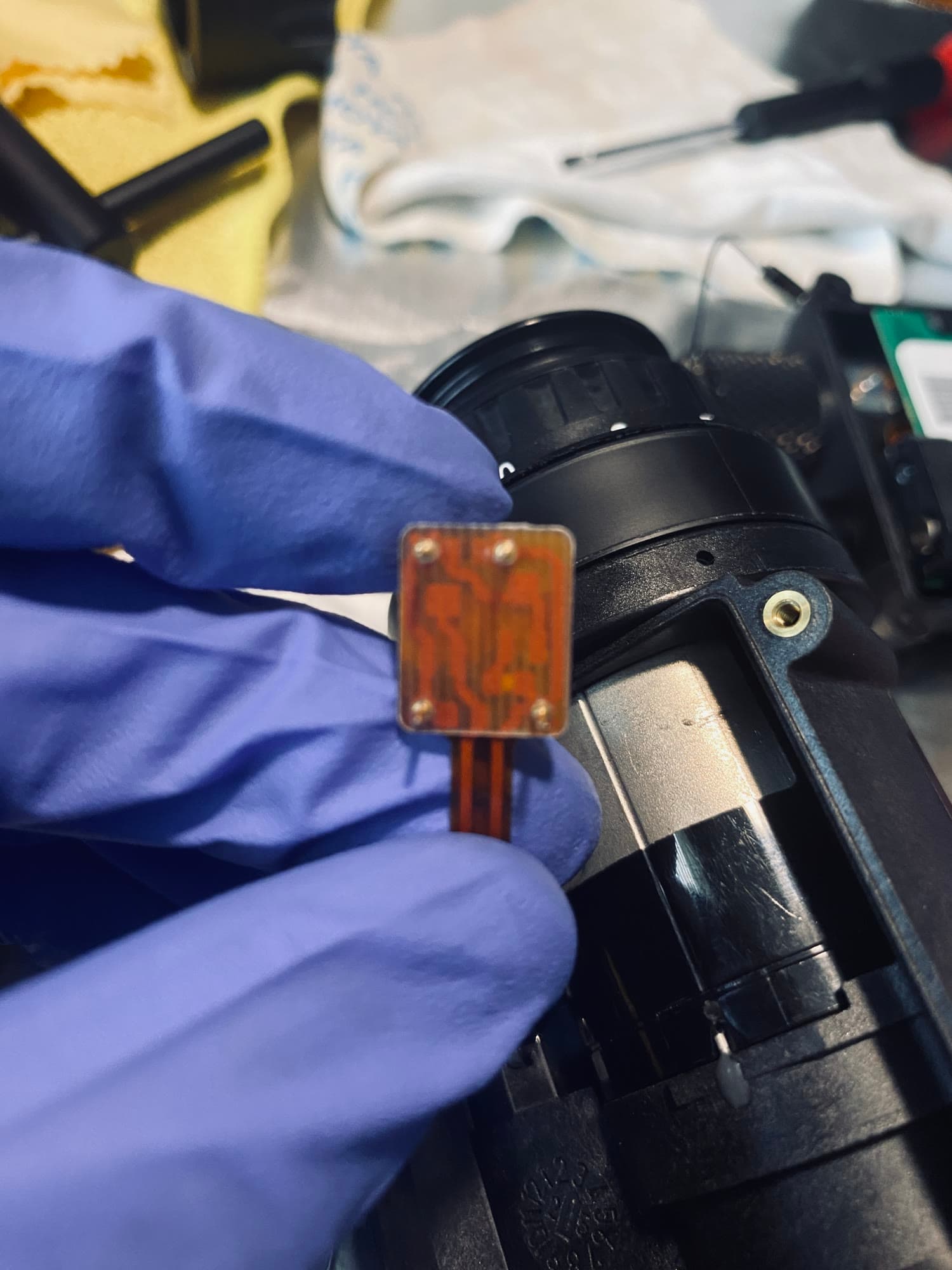
FINDING THE SWEET SPOT
178k was the problem. Wound that high, the gain pot was pushing the tube past where it wanted to run, and the tube was protecting itself by dropping voltage. That self-limiting is why it came in dim instead of blown. The tube was doing exactly what it should. It was just being told to do the wrong thing.
I took it into the darkroom and started turning it back. This is not a set-it-and-forget-it number. As I lowered the resistance I watched four things move at once: gain, how bright the phosphor screen ran, how much scintillation showed up, and how hard the tube was working to do it.5 Push for too much gain and the image gets bright but noisy and the tube runs hot. Back off too far and it goes dim again. The sweet spot is where all four sit in balance.
For this tube, that was 107k.6 Not 100k, not 110k. 107k was where it came alive, clean and bright, without straining. A different tube lands somewhere else. This one wanted 107.
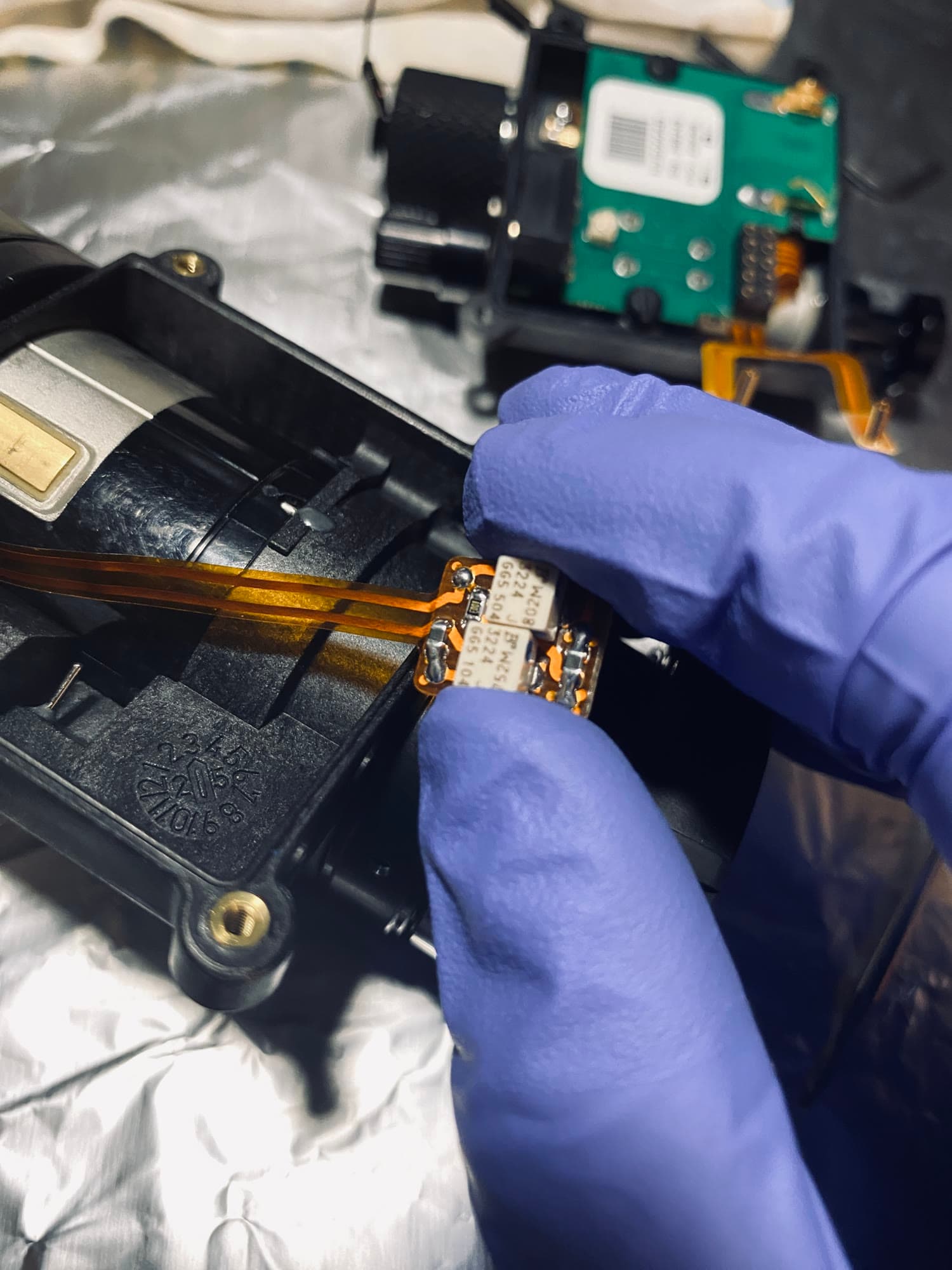
WHAT TO TAKE FROM IT
A dim tube is not always a dead tube. Before you write one off or ship it back, it's worth asking whether it's actually failing or just being driven wrong. The tells are in the image. A failing tube is noisy. A misadjusted one can be perfectly clean and simply dark.
The other lesson is the one the forums kept repeating: every tube is different. The values that worked here, 30k on the lower and 107k on the gain, are not a recipe. They're where this specific tube, at its specific age and wear, wanted to sit. The next one will be close but not the same. The numbers get you to the neighborhood. The darkroom gets you the rest of the way.
This one went into a new Noctis housing with fresh Carson glass and left as a unit I'd put my name on.7
Working notes from the bench, filed as builds come through. North Texas.
Back to Articles